
Building two startups at the same time taught me one simple truth: industries don’t just differ — they teach differently, too.
Co-founding two startups in two completely different industries has given me some of the most eye-opening lessons of my career. Many of these lessons are things I’ve heard before and understood in principle — but I realized that until you experience them yourself, they don’t fully sink in.
Sometimes we put good advice at the back of our minds, thinking we already know it, but we don’t intentionally practice it. Other times, we get excited about doing something totally new — which is good and energizing — but because it’s so unfamiliar, we become impatient when the results don’t come as quickly as we hope. And unless we understand why the pace is different, the journey can quickly become discouraging.
Here are the biggest learnings so far — the ones I probably would have learned much earlier if I had taken the time to consult with a business mentor… something I always advocate when it comes to corporate careers, yet somehow overlooked when I stepped into entrepreneurship.
1. Start with what you know — it reduces the learning curve.
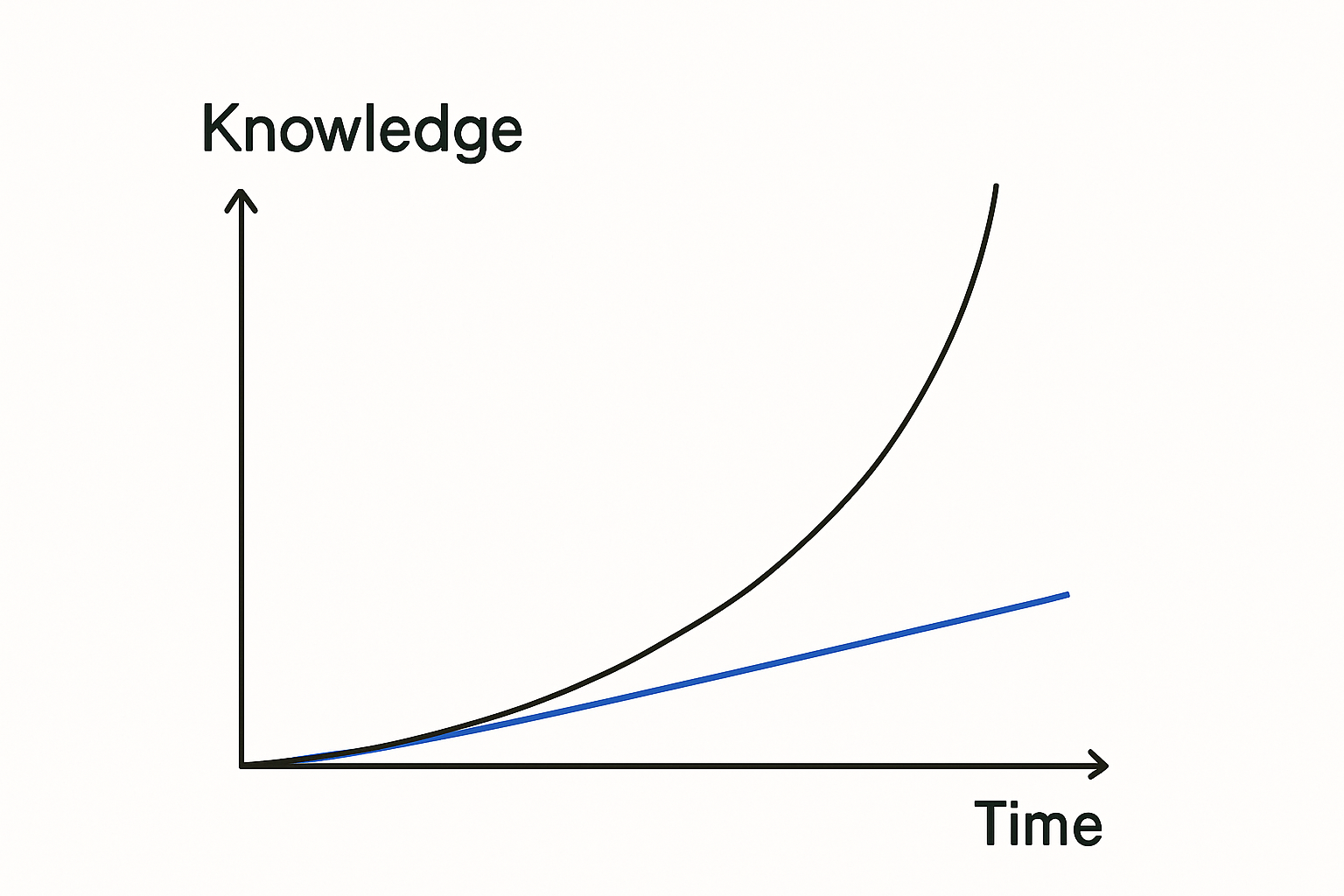
There is a huge advantage in beginning with an industry that feels familiar. When we started Pacific Rim and began bringing Katinko to Canada, the work was hard — but the path wasn’t confusing. Health Canada requirements, registrations, bilingual labels, compliance checks… these are long, detailed processes, but they are not new to my cofounders and me.
Coming from a CPG background (P&G), I know the rhythm and expectations:
- how regulatory timelines usually move,
- what “good” documentation looks like,
- how to anticipate compliance questions,
- and how to work cross-functionally to keep things moving.
Because of this familiarity, the learning curve isn’t steep — just lengthy. The work requires patience, but not reinvention. The foundation is already there.
Another learning from this experience is that it’s not just the industry that matters — the product category matters just as much. The closer the category is to your past experience, the smoother the journey. For example, at one point, we were exploring both Katinko and bottled alcoholic beverages. Both fall under CPG, and both require strict compliance when importing and selling in Canada. But the alcohol category is far less familiar to us. Katinko, on the other hand, aligns with a regulatory body and product type we already understand from previous roles. Even within the same industry, familiarity with the specific product category can significantly reduce the learning curve.
As I meet more entrepreneurs on this journey, I notice a common pattern: many of those who thrive stay in the same industry where they built their skills. Former pharmacists who retire and open their own pharmacies — and keep expanding. A nurse who worked for years in a large hospital and now runs a school for health workers. These examples aren’t new to me; they’ve always made sense theoretically. But in reality, when you’re finally at the stage of building something of your own, it’s surprisingly easy to deviate from what you know. Seeing these entrepreneurs succeed by staying close to their expertise reminded me that familiarity is not limiting — it’s an advantage.
2. Know which parts of the business you already understand — and lean into those strengths.
Even more important than knowing the industry is knowing your functional strengths. Each co-founder on our team brings different expertise:
- regulatory and technical knowledge
- marketing and consumer insight
- sales and partnerships
- operations and logistics

When each person leans into what they know best, the business moves further, faster.
This is where “divide and conquer” becomes more than a strategy — it becomes survival.
The clearer you are about what you already understand deeply, the easier it becomes to learn the things you don’t. A strong foundation gives you the stability to take on new challenges without feeling lost.
This mindset has made Pacific Rim smoother to navigate because the work aligns naturally with the experiences my co-founders and I already have.
3. Entering a new, less-established industry requires a different kind of courage.
EVDrop is a completely different landscape.
The EV charging ecosystem is young. Standards are evolving. The rules aren’t fully written yet. And the solutions require constant iteration. Everything here is unfamiliar.
At Pacific Rim, the steps were familiar even if the workload was heavy.
At EVDrop, every step felt like the first time.
Yes, the consumer and charge point operator (CPO) pain points we identified are real. Yes, the need is clear.
But building in a space that is still forming means:
- more discovery
- more uncertainty
- more conversations
- more pivots
- more patience
The learning curve is steep — not because it’s difficult, but because there is no clear path yet.
Here, I’m learning to lead with humility, curiosity, and resilience. It’s uncomfortable at times, but also incredibly rewarding because it pushes me to grow in ways a familiar industry does not.
4. A startup grows faster when founders complement each other — not copy each other.
The best progress we’ve made in both startups has come from leaning into our combined strengths. We are different — technically, creatively, strategically — and that is the point.
When founders try to be good at everything, the startup slows down.
When founders focus on their superpower, the startup speeds up.
Skills diversity is not optional — it’s an accelerator.
5. Growth comes from balancing familiarity and discovery.

Pacific Rim gives me stability because it is familiar. EVDrop gives me growth because it is not.
And I’m learning that a founder needs both:
- Familiarity shrinks the learning curve.
- Discovery expands your capability.
One grounds me. The other stretches me.
And together, they create a balanced path forward — steady enough to walk, challenging enough to keep evolving.
My takeaway for anyone thinking of starting something new:
✨ Start with something familiar — it builds confidence and momentum.
✨ Know your strengths — anchor your role in what you already do well.
✨ Don’t fear new industries — they push you to innovate differently.
✨ Choose co-founders whose strengths complement yours.
✨ Expect some journeys to be clear and structured… and others to feel like the wild west. Both are valuable.
Both startups challenge me differently, and together they are shaping me into a better founder.







This is the type of “thought piece” I’d love to continue reading ~ subscribed to the newsletter.
Sort of aligns with the science of how our brains use patterns in our behaviour to build confidence and determine if we’re capable of something. When you start your first business in an industry similar to your strengths, you’re tapping into that confidence of being able to win in your previous role. And similarly, when starting the second business, you tap into the past pattern of already having built something new from scratch!
Thank you so much, Leena — I really appreciate this reflection. You articulated it beautifully, especially the idea of confidence built through patterns and prior wins. That’s exactly what I’ve been realizing through experience, not just in theory. I’m glad it resonated with you.